
How to use the weekly plan
The plan places three short sessions across the week. The days can be moved, but leaving space between sessions gives the body time to settle.
Each practice can last ten to fifteen minutes. Shorten it when energy is limited and keep every position within a comfortable range.
What equipment is useful
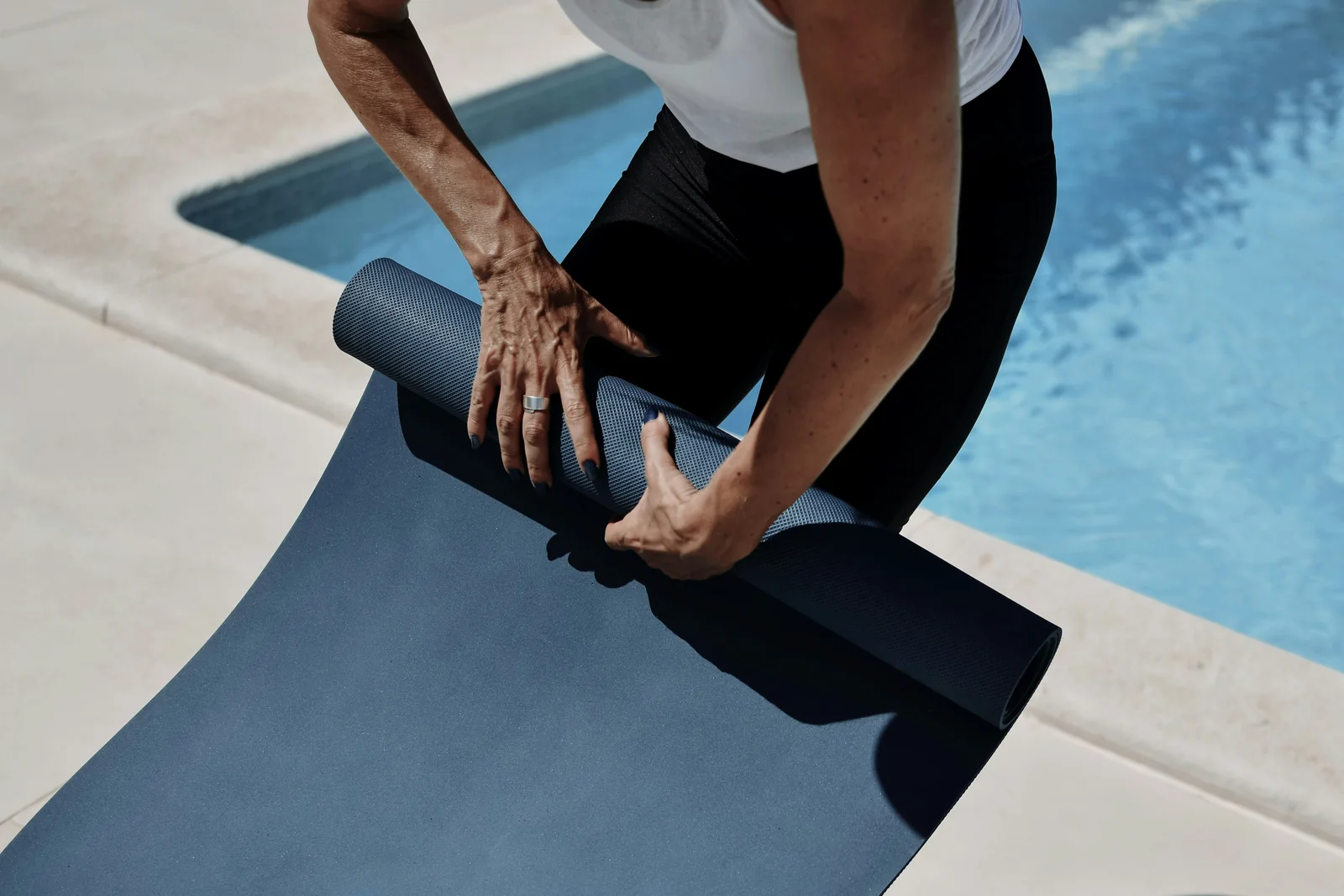
A stable chair, a clear wall, a non-slip mat, and a folded blanket are enough for the plan. Choose support that does not slide or tip.
Comfortable clothing and a quiet area can make it easier to focus on breathing and controlled movement.
Monday mobility session
Begin with seated spinal movement, shoulder circles, and a supported hip hinge. Add a comfortable standing side reach and finish with relaxed breathing.
Move slowly and use the chair whenever balance feels uncertain.
Wednesday hips and legs session
Use a supported low lunge, a gentle hamstring stretch, calf mobility, and simple balance with chair support. Spend a short, equal period on each side.
Avoid forcing the front knee or pulling deeply into the back of the leg.
Saturday full-body flexibility session
Combine a gentle standing sequence, supported side stretch, comfortable seated twist, and quiet breathing. Keep the session smooth rather than intense.
Finish in a stable seated position and notice whether both sides feel settled.
Using a chair or wall for support
Support is a practical tool, not a sign that the movement is less useful. Place the chair on a firm surface and test it before leaning into it.
A wall can help with standing alignment, calf work, and balance.
Comfortable breathing
Keep the breath steady and avoid long holds. Exhale during a gentle reach or engagement and return to natural breathing between positions.
If breathing becomes strained, reduce the range or come out of the position.
Rest days and walking
Tuesday, Thursday, Friday, and Sunday can include ordinary walking or brief movement breaks rather than a formal session. Rest remains part of the weekly rhythm.
Walking pace and duration should match current comfort and conditions.
Adapting positions
Use a smaller range, raise the hands, bend the knees, or sit in a chair. A folded blanket can support the hips or knees.
Adaptation keeps the purpose of the movement while making the position more manageable.
Signs that a movement should be stopped
Stop for pain, dizziness, unusual pressure, numbness, sudden weakness, or loss of balance. Do not try to push through these signs.
Seek qualified guidance when concerns continue or when a previous injury changes what feels safe.
Continue reading
Explore All Guides